
Upon pressing ‘play’ on BRAT’s latest offering, Manslayer, out now on Prosthetic Records, you’ll be confronted with Aileen Wuornos’ voice. “There’s no sense in having me tormented for the rest of my life when I don’t deserve to be tormented,” she says, before her voice is distorted at the final line: “I did what anybody else would do.”
The infamous American serial killer—who was executed in 2002 after spending over a decade on Florida’s death row—became a surprising inspiration behind the Louisiana-based death metal band’s sophomore album—though, not too surprising, once you glean the evident parallels between her actions and the album’s title. “She really is just kind of a great representation, I think, of the broad theme of the album: a woman scorned who hit a boiling point [and] lashed out,” vocalist Liz Selfish explains.
Wuornos marks the first half of Manslayer, dominated by songs that center on the issues and turmoil that women continually endure; while the album’s second half centers on enacting revenge, with women becoming the aggressors. Manslayer’s interlude is reminiscent of a soundtrack to a late-night true-crime documentary, a techno beat pulsating across a chilling announcement that, semi-based on true events, introduces “The Manslayer”: “Tonight, we look inside the mind of a killer behind a series of bizarre and gruesome acts of violence.”
Brutality is not a foreign concept for BRAT: From their first single, 2021’s “Chain Pain,” the foundation was laid for the band’s merging of metal and hardcore, with a savage undercurrent in their instrumentals and Selfish’s gutturals. Still, the band are never ones to take themselves too seriously, wielding a gore-infused campiness in their performances that hears pop music samples play just before a given breakdown or blast-beat—Cascada’s “Everytime We Touch” was a live staple, until its recent retirement from their sets—and pink-hued imagery adorning everything that BRAT touches. From this, their brand of “bimboviolence” was born.
Perhaps you’ve come across one of BRAT’s viral on-stage moments during which Selfish, informed by her years spent doing theater in her youth, prances the stage with a commanding presence, often dancing along to a chosen pop tune before her bandmates lead the audience into a deathgrind whiplash. I ask whether BRAT’s essential element of camp was always a factor, from the band’s beginnings: “I don’t know about them, but me, for sure!” Selfish says with a laugh. “If I’m going to a show; I expect a show. I want fun; I want to be entertained! I think if people are paying money to go see you live, you owe it to them to be entertaining … because if you’re just going to make it feel the same as sitting at home and listening to the record, then what’s the point in going to see it live? I always try to keep that in mind.”
On Manslayer, BRAT’s duality reaches a new height, primarily with thanks to Selfish’s lyricism. Prior to the sessions for Manslayer, songwriting was an outlet that she had never considered before, but she was compelled to pick up her pen, writing along to the band’s—guitarist Brenner Moate, guitarist Ian Hennessey, and drummer Dustin Eagan—prerecorded demos, and fell in love with the process. “My main thing was, I wanted to really lean into the storytelling aspect of it,” Selfish says, “and create interesting stories that do draw inspiration from real things, but are also entertaining, and things that reflect my interests, selfishly.”
Her songs build a bridge between fantasy and reality, as an overarching theme of scorned women appeared naturally. “Bloody Mary” is indebted to folklore, for instance, while “Botch Tox” is written about the societal pressures placed on women to undergo facial reconstructive procedures, while “Speculum Bleed” is a gynecological horror story. All weave gruesome imagery and subsequent screams with surgical precision—scalpels, needles, and blood, galore. Selfish names the English death metal band Carcass as a reference behind the clinical descriptors that she implements in her songwriting, punctuating the gore. “It’s like a metal dictionary, those first couple Carcass albums,” she says.
Sonically, Manslayer branches across the spectrum of heavy music—from thrash to hardcore, grindcore, and death metal merged with Moate’s roots in punk. He cites Turnstile’s 2013 EP Step 2 Rhythm alongside New York’s Backtrack and classic thrash bands Sodom and Annihilator as core pillars of BRAT’s eclectic sound, and notes country music as a source, particularly in Selfish’s lyrics. Listening to the likes of Carrie Underwood or The Chicks, there is a common thread of women gaining vengeance after they have been wronged. “There’s certainly a lot of horror and death metal writing on the album, too,” Selfish says, “but mirroring those two themes together helped shape the whole thing.”
Given the range harnessed in their discography over the last five years, I wonder how Selfish and Moate may trace the trajectory of their sound. Moate hears Manslayer as “the next step in an evolution,” one that materialized, in part, because of the increased collaboration between the members. Selfish’s lyricism, he says, has also sharpened their lens on how a song can evolve beyond the record: “She has more of a focus than I ever did on making parts catchy or parts that encourage crowd participation,” Moate explains. “That’s always a consideration that we think about, how a certain part is going to translate live.”
BRAT’s fusion of melodies, genres, visuals, and more largely stem from the New Orleans scene in which they formed back in 2020, a city whose metal roots remain intrinsic, brewing legends from Acid Bath to Exhorder, Crowbar, and Eyehategod. “New Orleans is definitely a melting pot, as far as genres [are concerned]. It’s such a small city that every kind of style tends to play together,” Selfish says. “You’ll have punk bands, a black metal band, a thrash band, and a death metal band—all on the same bill. But I think that’s cool, and that probably reflects in our music, too … We like a bunch of different styles, just because that is kind of how the community here is, too.”
Like any contrast found in horror and death metal, alike, BRAT’s music continues to grow more ambitious and urgent, in the scope of how it rests between theatrics and social commentary. With Manslayer, they seem to find their ideal niche.
Manslayer is out now. Get it here.
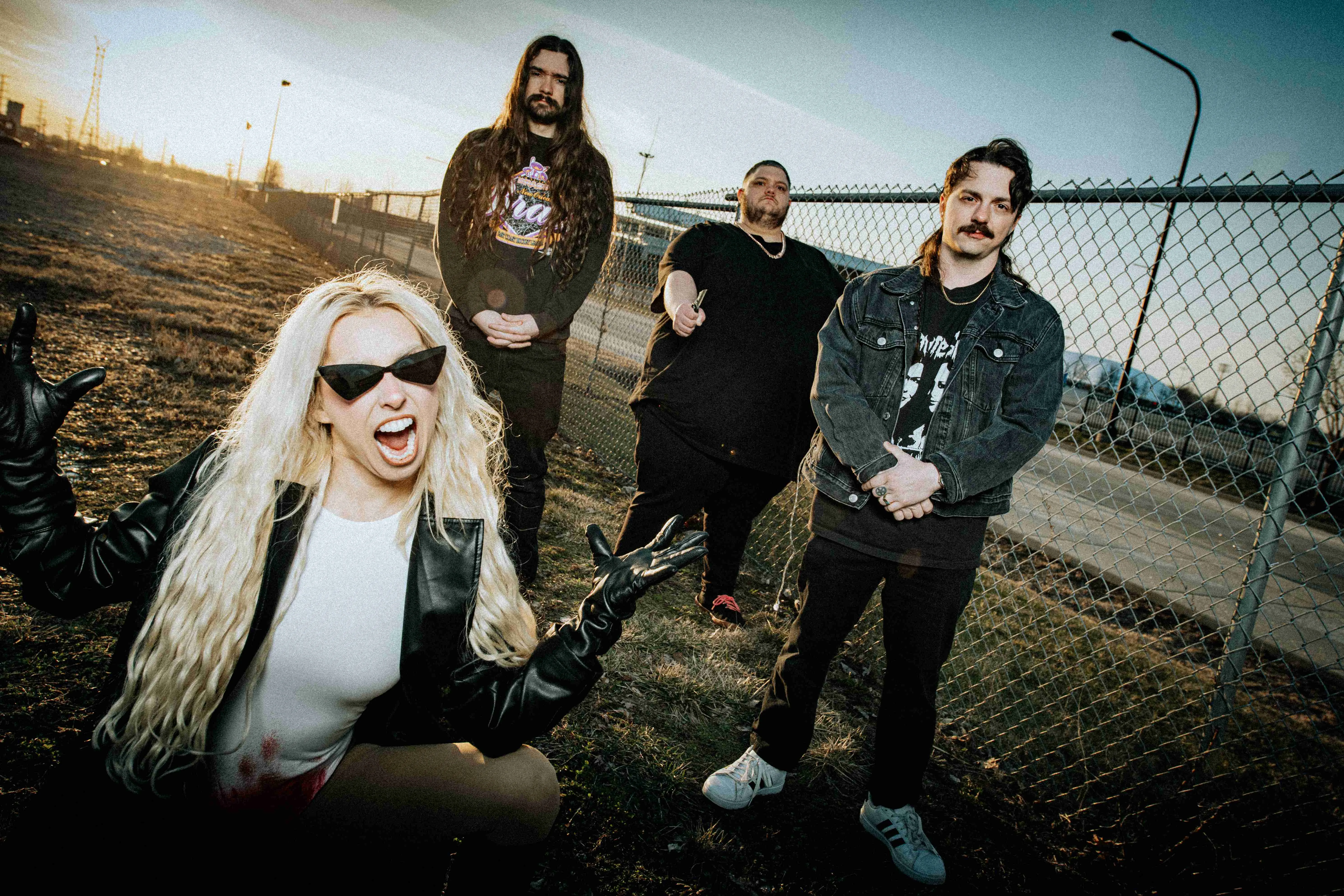
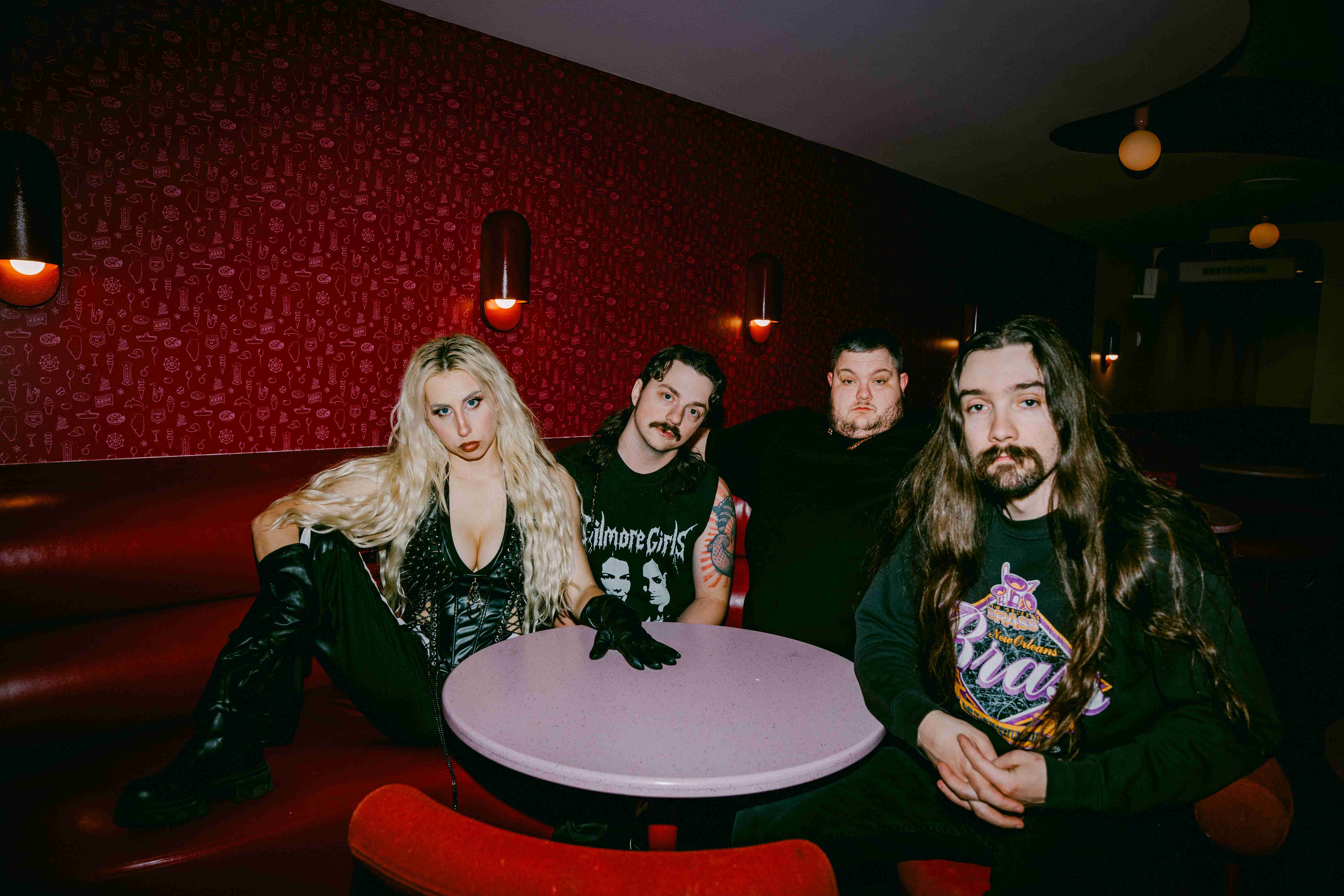
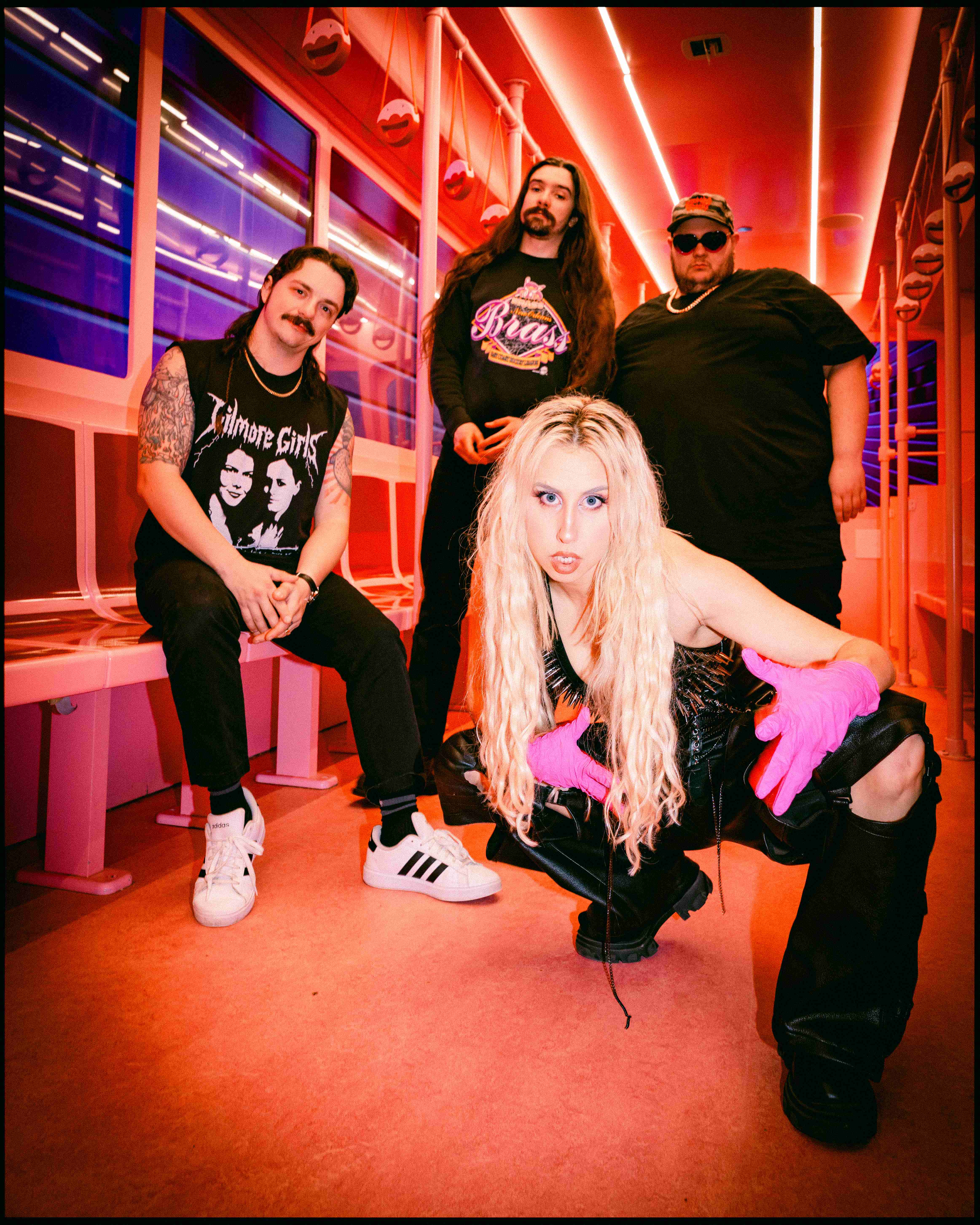
Photos courtesy of Vanessa Valdez