
I’ve noticed that Tim Armstrong of Rancid has this thing he does with his records. If you look at the names of the first, and usually the last track of (most of) their 10 studio-length albums, there’s clues left behind regarding the theme of whatever that album is about. If you’ve been following along closely over the years, this has especially been apparent within their past two decades of material.
Indestructible, for example, starts out with the namesake title song and ends with track “Other Side.” An ode to friends and family who have passed away, it’s in both stark contrast to the message of the album’s initial song and representative of the above mentioned full circle track listing pattern I’ve observed closely over the years.
Almost as well known for “Trouble” (the cut track off the album which landed both Armstrong and its eventual performer, vocalist Pink a Grammy Award the following year) as it is for all its other songs, critics complained the album was too poppy and pandering to the general public with singles like “Fall Back Down,” and “Tropical London” reflecting Armstrong’s turmoil filled personal life in the years between releases.
Logically speaking, with Rancid completing a successful tour with Blink 182 and Armstrong also heavily focused on the Transplants that same year, I’m unsure how pop punk couldn’t have an influence on the band during that time period… isn’t that how songs are written? Isn’t that a critical part of the creative process? Reflecting on your own personal experience?
Plus when an artist is on a non-stop world tour, all they see is a plane, bus, sound check, backstage, gig, hotel, rinse, repeat. Where exactly is one supposed to draw inspiration from to write about, other than what’s right in front of them? One vocalist I interviewed said the only break they got was killing time above a casino not on Gamstop in Prague—thirty minutes, two drinks, and a scrap of melody that made it onto the album. If the demands put on these artists to be authentic and original, along with the expectation of them to align with some sort of invisible ideal that’s gatekept by a very specific stranglehold of archival releases (that are mostly sentimental in value to their fans in the first place), then what is the point of even making new music?
Rancid could have gone the CockSParrer route and coasted off of the success of two to three albums well into their retirement years, but they continue to write; they continue to tour; they continue to be inspired. And they continue to show up for us with new material.
What’s interesting about releases like these are the sky-high double edged sword of the expectations from critics and fans alike, especially of a band like Rancid’s stature. How is a band who, as the saying goes, basically invented the wheel according to most ska punk circles, supposed to continually reinvent a wheel that they pretty much created themselves?
Which is it? Do folks want “the wheel” or something different? It’s a double bind, because no matter what they do they just can’t please everyone. One thing that Rancid have always done is accurately reflect whatever moment on their path they were on which is exactly what makes their music, especially the early material, so highly precious and sentimental. It’s the high relatability of it all. They are the storytellers, and the memory keepers, but are they “as relatable” all grown up?
We all grow up. We all have to grow up. Something about the punk scene that really makes me itch is its outright resistance to anything fresh and new. The older I get, the more I see this sort of “I peaked in high school” sort of mentality of still listening to the same 40 bands on rotation, still squeezing into the same Fred Perrys and patched jeans they wore when they were 22, still going to the same bars and clubs, with the same people, doing the same thing over and over again on autopilot.
And while yes, that does keep the subculture alive, it also makes folks highly allergic to anything non-familiar and can therefore be very non accommodating towards any concept they’re not completely used to. Like new music.
I always thought that punk was about doing whatever you wanted and not following the rules, so it’s especially ironic when these invisible parameters are projected onto punk rock artists. It’s almost as if the limitations that keep an individual person from self actualizing get projected onto those who live so freely that they get to do whatever they want.
But then when they actually do whatever they want, the eventual output is highly scrutinized as some sort of mass deflection from the ass itch it creates within those who are just not at the same level of achievement. At Rancid’s level, in my opinion, they have earned the right to do, write, play, and release whatever they want, regardless of who likes it or not. As long as they like it and keep playing as a result – that’s what matters to me.
In 2003, it’s release year, Armstrong was busy touring with his other band, The Transplants, and Lars Fredricksen was out with Lars and the Bastards, themes that were well explored in their next album, Let the Dominoes Fall, if you look closely at the “homecoming” track of “East Bay Night”, then ending full circle with “The Highway,” a song about feeling nostalgia for the road.
Honor is All we Know was pushed two whole years from its original launch date all the way to 2014 because of Transplants business, again, and touring duties for Armstrong’s solo album, A Poet’s Life. With such a hectic schedule causing even Rancid’s 20-year anniversary tour to be shelved that year in 2012, “Back Where I Belong” seems to be a fitting kickoff track for the album as was “This is Not the End,” the closing track on Troublemaker which followed in 2017, and their last release up until this year.
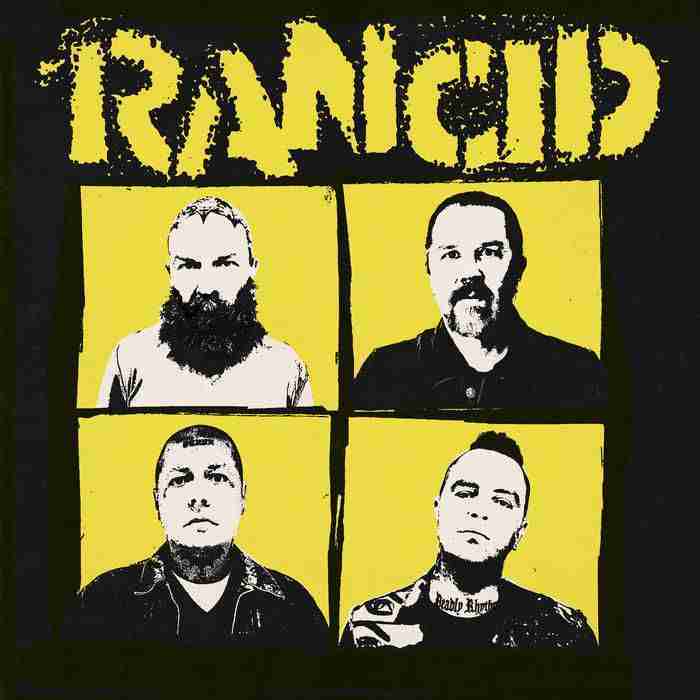
And back they are—wasting no time and getting straight to business with the title track, “Tomorrow Never Comes,” the very James Bond-esque sounding name of Rancid’s latest studio length album effort, released Friday June 2. The fast, in your face, and aggressive track is the first of 16 that deliver classic, anthemic punk rock, with this particular song destined to be brick-laid into touring set lists for many years to come.
This is Rancid’s shortest album, with all cuts coming in at just 28 minutes and 45 seconds but with no lack of passion, nor variety. You could get through this album before the washing machine buzzer goes off, and although it undulates in terms of consistency, it’s a reliable record with roughly half the songs being single worthy quality tracks which is better, in my opinion, than your standard 12 track album with only three or four good songs.
The album starts off strong with a cluster of solid intro tracks before kind of losing my interest towards the middle then abruptly picking back up again. In fact, the second half of Tomorrow Never Comes is pretty amazing, there comes a certain point where that …and Out Come the Wolves style momentum picks up, with one song effortlessly flowing into another.
I think that’s also why the album feels like a quick listen—They just don’t come up for air after a certain point. This is the most relentless music I have heard from the band since their self-titled record all the way back in 2000, which has been hailed by critics as their most original album in terms of not being highly compared to, or sounding like any other band or major influence.
That doesn’t rule out, however, the obvious inspirations the band are constantly pulling from, and if some see that as trying to reinvent the wheel of what other bands have already done, then at this level I suppose those opinions are inevitable.
Released on May 24, recent single “Devil in Disguise” really reminds me of the folk inspired music that The Rumjacks have been putting out lately which is somewhat of an “inception” for lack of a better term, since Rancid has been such an undeniably clear influence on the pan-continental band’s more ska-leaning songs, not to mention Johnny McKelvey’s bass playing style.
Anecdotally, songs “Mud, Blood, and Gold,” as well as “The Bloody and Violent History,” have a historical twist to the lyrics, almost as if Lars and Matt, for example, were inspired by all the extra reading they got in during the pandemic. With both tracks mentioning San Francisco during it’s Barbary Coast gold rush era, our “punk uncles” in Rancid have apparently done us a solid by infusing a bit of a history lesson in with their latest album, and while I’m unsure which band members exactly collabed to create the lyrics, I could also take a pretty good guess just based off the cities they currently reside in.
I definitely have some personal favorite songs, several in fact, starting with number four, “New American.” Another reason why I don’t jump the gun on reviews is because it allows me to watch both live footage from recent gigs, and any music videos that have just come out. The band has done something interesting with their video releases for this album because instead of shooting separate videos with individual sets and story lines, they’ve shot a live playthrough of the entire album and are releasing each song and video one by one as the various singles drop.
The remaining tracks are all cataloged on YouTube in chronological order as lyric videos, providing a passive, yet unique visual element for each individual cut. I’m not saying this has never been done before, but it’s a fresh video approach for an older band and a decent offering considering that this has been their longest hiatus in between albums ever, from 2017 up until now.
Possibly inspired by the pandemic and the efficiency of the livestreaming culture that sprung up around it, one is taken back to the “Evil’s My Friend” video off Troublemaker aesthetically, with the band all set up in a rehearsal studio-like space at Ship Wrek’d Studios with no frills, just jamming, all highlighted by grainy, single dimension after effects comparable to the “Red Hot Moon” video.
The musicality really reminds me of something that Lars and the Bastards would do and is very comparable to songs like “To Have and to Have Not,” with the same kind of sound and upstart energy that that particular track encompasses.
I love “Drop Dead Inn” because it really reminds me a lot of my favorite Rancid song, “New Orleans.” I’m always partial to the songs that Lars sings, maybe because they’re fewer and farther in between, maybe because nobody can ever forget the first time they heard:
“Little Sammy was a punk rockerrrrrr…” but this very brief song about both existential and personal redemption tugs at the heart strings with some of the most sincere lyrical content you’ll hear on the entire album:
“I need a place where I belong
In a world that’s all gone wrong
The broken can be healеd with love
I know the judgment will bе put aside
‘Cause I’ll make it through with the three of you
We all can shine and everyone will know it”
I was unable to determine who wrote the lyrics for this particular track, but if they were indeed penned by the Viking, I’m positive that the words are just as much about his girl and two sons as they are about his fellow bandmates, with the easily interchangeable nature of the lines being no happy accident or coincidence.
And Uncle Larsy keeps the pace with “Magnificent Rogue,” the place marker where Tomorrow Never Comes really starts to pick up speed more than halfway through. The four-piece aggressively rips into the song with both Fredricksen’s signature flashy guitar licks and Freeman’s complex bass lines leading the way like cavalry soldiers charging (Charger?) into battle, and before you know it, the song is over after one giant circle pit, whirlwind of a momentum. This is another track that is very reminiscent of Lars and the Bastards, and the revival of a sound I’d like to hear come back around more often.
“One Way Ticket” takes me back to Let’s Go, and “Eddie the Butcher” has an outrageous bass line in the beginning just like “Maxwell Murder” is known for. The slurry and slightly off count vocals that Tim Armstrong are famously known for are well showcased on “Hear us Out,” rolling straight into the last, and final track which, knowing Rancid, is actually a clue for what’s to come, entitled: “When the Smoke Clears.”
“It can only get better from here, when the smoke clears,” the song promises as it looks back on the ‘for now’ conclusion of a journey that has left its protagonists beat up, heart broken, and worse for wear, but with no shortage of determination or signs of quitting anytime soon. A fitting ending for an album six years in the making after several bands, tours, marriages, and decades later.
I find it ironic whenever I read complaints that bands like Rancid can’t or won’t stick to their “original formula” whenever they sort of even try to experiment with their sound or evolve in any way. Ironically, if you use Rancid as an example, I can’t think of a band who stick to their original method more than this band has steadfastly over the years.
For example, this is the eight consecutive album they’ve had producer Brett Guerewitz collaborate on, with the only time they ever diverted away being the years they self-recorded Life Won’t Wait while on tour in an assortment of studios all around the world, including in Jamaica with Buju Banton.
Considering that Tim and Lars had to cut the epic, dancehall reggae inflected album all the way down from its 50 original tracks themselves, it’s no wonder they immediately brought Guerewitz back again to release the straightforward and hard hitting self titled Rancid album directly afterwards, an arrangement they’ve stuck with ever since.
They’ve kept two thirds of their original lineup this entire time with their newest member coming up on his 20th anniversary with the band in the next three years. They have toured, both consistently and relentlessly throughout the years despite getting married, having and raising children, playing in other bands, running labels, and developing other artists.
Somewhere in there they’ve managed to write and record enough new material to consistently release albums for those tours to support on top of doing all of the above, which is a lot within itself. These guys are not 22 years old with no one to be accountable to anymore; that’s just not how life works, even for famous people. And these men are just that, people. They are people, they are not machines.
It’s astonishing to me, as someone who has grown up listening to Rancid, who is from the same area as Rancid, came up in the exact same scene as Rancid, have all the same adult friends as the members of Rancid, have actually literally worked for a member Rancid, and is now reviewing Rancid and their music… (crazy right?) I could basically have a PhD in Rancid at this point and if there’s one thing I can say about them, it’s that they have been consistent. Their music hasn’t all been exactly carbon copy the same from album to album over the years, but they have been consistent. And that’s why they’re Rancid.
Now, if folks haven’t consistently liked one album as much as the one before or after it, then that’s life. You’re always going to like certain albums more than others when you’re looking at a catalog spanning nearly 30 years. And similar to the album that I’m reviewing right now, even if Rancid’s career started off hard and fast, then kinda slowed down, then picked right back up again, in a big picture sort of way whether you prefer the super early stuff, the poppier stuff, or the later stuff, your choices are valid because it’s just what you like.
And at this point, Rancid are just playing what they like. This album doesn’t so much have a cohesive sound as it does a certain sort of feel, it has this energy about it, with sincere, meaningful lyrics brimming with all the wisdom and intentionality that five plus decades on this planet will bring you, plus perhaps an equal amount of trips around the world for added perspective.
Determination. Resolve. Dignity. Endurance. Grit, and Grace. All the “content pillars” it takes to make up a group that was originally a spin off of the best ska punk band of all time, and one who has now lasted an entire lifespan of their own..
And the truth is, “When the Smoke Clears,” I know that Tomorrow Will Come back for Rancid with another album and tour… whenever they’re ready to, that is. I was a little bummed to see that they were only touring Europe this summer plus a mere two shows in the states, but if that’s all they want to put on their books for the year so as to not burn themselves or their families out, then that’s fine by me.
This album truly seems like the first time they’ve ever just said “fuck it” and did whatever they wanted instead of countering their last effort with some sort of contrasting sound, heavily tributing a mentor, or being compared to several other artists as a result; and it truly takes pause, time, space, rest and peace to get results like that as an artist. When you are constantly trying to create while also within perpetual motion you will always be an exact reflection of your literal environment. What other inspiration can one take with no time for pause? Again, the double bind of being a successful performer is chock full of both misnomers and complexities.
At the age of 21… Rancid punx, well I’m a lifer.
And, in just under 29 brief minutes, Rancid have delivered an uplifting new album full of anthemic songs laced with the classic nostalgia of the East Bay ska punk sound they’ve cultivated after almost 30 years on the road, along with a brand new sense of purpose and determination that’s impossible to ignore. In a way, I feel like this is a whole new beginning for Rancid, and I’m enthusiastic to see what they continue to work on, and release, for many years to come.